
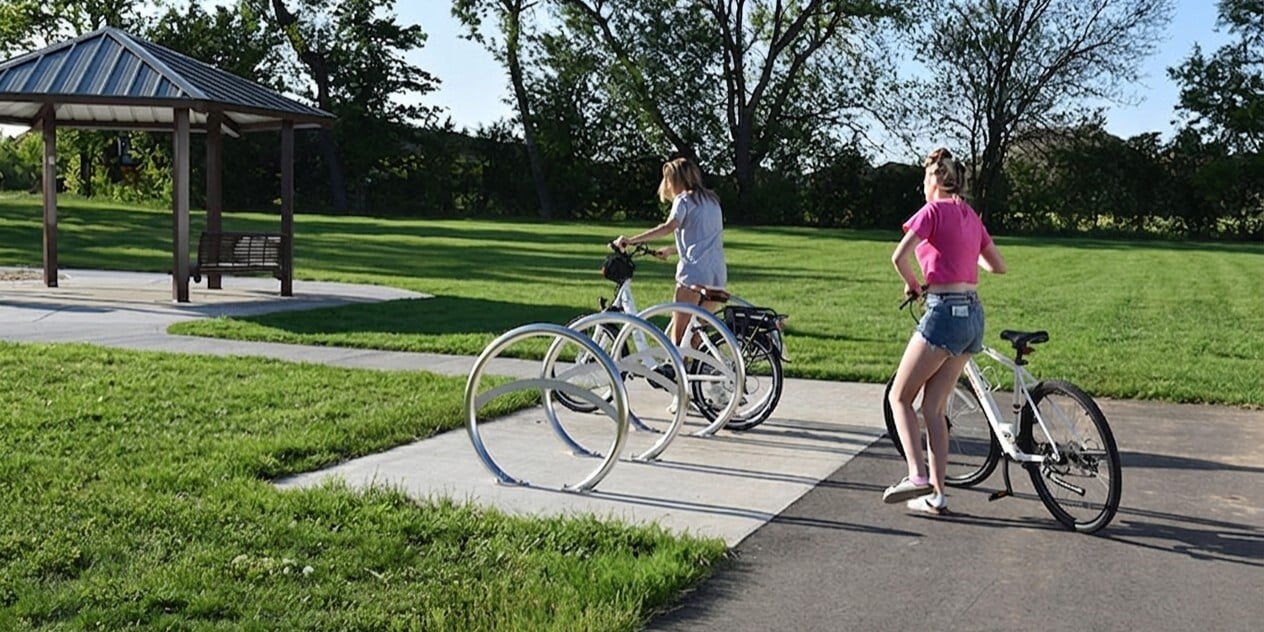
Well-planned bike parking makes it easier for visitors to choose cycling, navigate the area, and securely store their bikes while they enjoy the space. But even small design decisions, from rack placement to spacing and finishes, can affect how well a bike parking area serves the people who use it.
The good news? Most common bike parking challenges can be addressed during the planning and design process.
Here are eight considerations to keep in mind when planning bike parking for public parks, trails, and other outdoor spaces.
Common Design Mistakes to Avoid When Planning Bike Parking
1. Placing Racks in Hidden or Low-Traffic Areas
Bike parking is most useful when visitors can easily find it and access it as part of their normal route through the park.
Tucking bike racks behind buildings, near maintenance areas, or in isolated corners can make them less convenient and less inviting. Locations that are visible from walking paths, entrances, seating areas, or other active spaces can also provide greater natural visibility for parked bikes.
When planning bike parking, look for locations that align with how people naturally move through the park. Near main entrances, along walking paths, and close to destinations such as pavilions, playgrounds, restrooms, and event spaces are often good options.
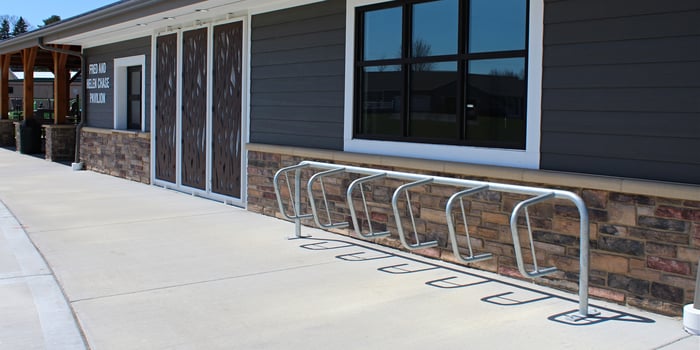
The goal isn't simply to find an open area for bike racks—it's to make bike parking a natural part of the visitor experience.
2. Underestimating Capacity for Future Growth
Bike parking that meets today's demand may not be enough as cycling becomes more popular.
Active transportation initiatives, new trails, nearby development, and changes in park programming can all influence how many visitors arrive by bike. If every rack is consistently occupied, cyclists may turn to benches, fences, railings, or other amenities for places to secure their bikes.
Planning for some additional capacity during the initial design can make it easier to accommodate future demand. Where space is limited, higher-density bike parking solutions can also provide additional parking without requiring a larger footprint.
Consider current usage, nearby bike routes and trails, planned improvements, and the types of activity on-site when determining how much bike parking to provide.
3. Selecting Racks That Don't Support Secure Locking
Bike racks aren't all designed the same way. A rack should give cyclists a convenient way to secure the bike frame and wheel with a U-lock or other common locking method.
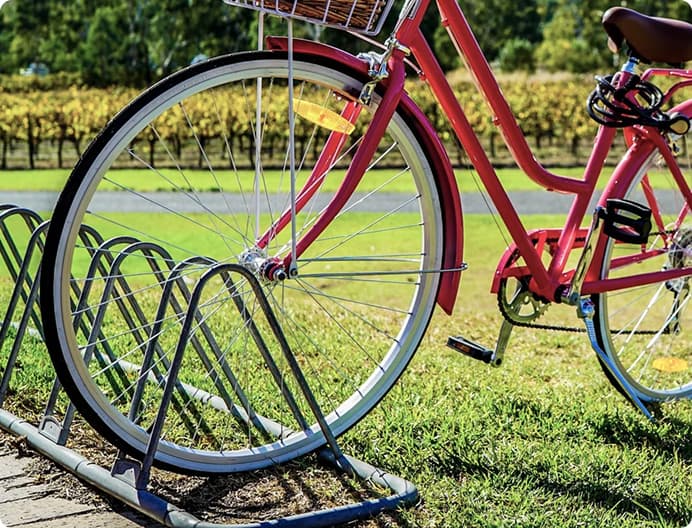
Some older or wheel-only rack designs only support the front wheel, which doesn't provide the same level of security or stability as a rack that supports the frame.
When selecting racks, look for designs that provide two points of contact and allow cyclists to secure the frame and wheel. Consider the variety of bikes visitors may bring too, including bikes with wider tires, frames, baskets, and other accessories.
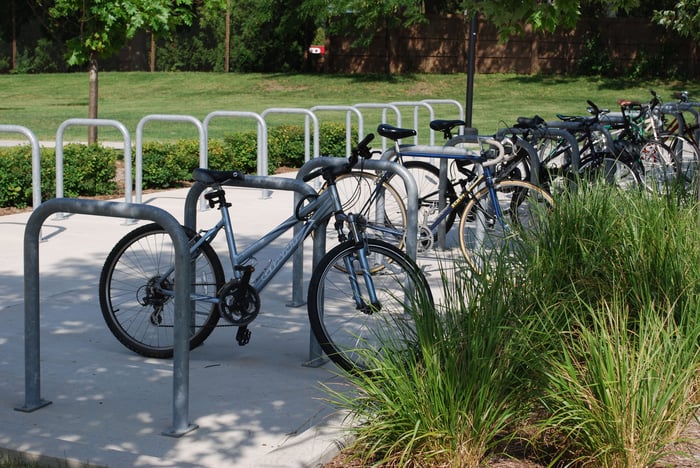 Inverted U-style racks remain a popular choice because of their simple, familiar design and compatibility with a variety of bikes and locking methods.
The best rack is one that's easy for cyclists to use correctly.
4. Ignoring Spacing and Maneuvering Room
More racks don't always mean more usable bike parking. If racks are placed too close together, handlebars and pedals can interfere with neighboring bikes, making it harder for cyclists to park and retrieve their bikes.
Adequate spacing also gives cyclists room to approach the rack, position their bike, and access their lock. Industry guidelines recommend 48 inches between racks (36 inches minimum) and 36-inch setbacks from walls or obstructions. This spacing accommodates the bike itself plus room to access the lock from either side.
Think about the entire parking area and not just the distance between individual racks. Cyclists need room to approach from the pathway, maneuver their bikes, and comfortably access the parking space.
5. Mounting Racks Improperly for the Surface
Surface selection and mounting method directly impact security.
Existing concrete can often accommodate surface-mounted racks, while new installations may provide opportunities for in-ground mounting with concrete footings.
Natural surfaces such as grass, soil, or loose gravel typically require a different approach to create a stable, durable installation. In these situations, either digging to pour concrete footings, or selecting freestanding or rail-mount bike racks are a good option.
The right mounting method depends on the site, surface, rack design, and project requirements. During planning, consider both the immediate installation and how the bike parking area will hold up to regular use over time.
6. Choosing Finishes That Cannot Withstand Outdoor Conditions
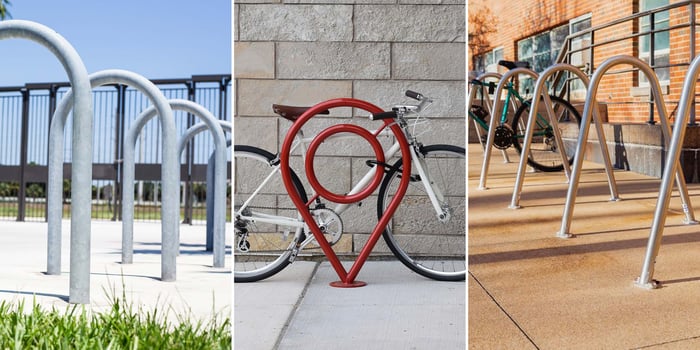 Outdoor bike racks can face exposure to rain, UV light, humidity, and temperature swings. Standard painted finishes often peel, chip, and rust within a few seasons.
Galvanized or stainless steel finishes resist corrosion for longer. Hot-dip galvanizing creates a zinc barrier that weathers to a neutral gray and requires almost no maintenance.
In coastal or salt-prone areas, stainless steel or electropolished finishes hold up even better.
Powder-coated finishes provide opportunities to coordinate bike parking with park furniture, signage, buildings, or other site elements.
7. Failing to Consider Accessibility and User Experience
Bike parking should be easy to approach, use, and navigate.
Narrow pathways, tight turns, steep transitions, or obstacles between racks can make parking more difficult for cyclists with cargo bikes, trailers, adaptive cycles, or other non-traditional bikes.
When laying out bike parking, consider the approach from nearby pathways and accessible routes. Leave clear approach paths at least 60 inches wide and try to position racks so cyclists do not have to lift their bikes over curbs or navigate stairs. ADA guidelines also apply to bike parking areas that connect to accessible routes.
Considering user experience from the start prevents redesigns or complaints after installation.
8. Treating Bike Parking as an Afterthought
Bike parking is a functional amenity, but that doesn't mean it has to look purely utilitarian.
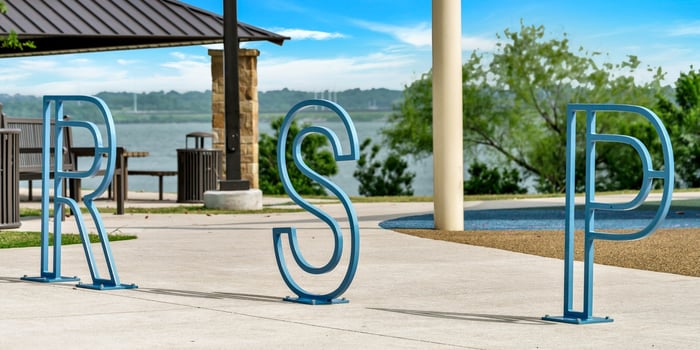 When racks are thoughtfully integrated into the overall site design, they can complement surrounding landscaping, furnishings, architecture, and park amenities. Custom rack shapes can add personality, while coordinated finishes can help bike parking feel like an intentional part of the space.
For parks with a strong local identity, themed bike racks can even become a small design feature. Racks inspired by local landmarks, natural elements, or community themes can add visual interest while providing practical bike parking.
Madrax offers made-to-order bike racks with a variety of designs, colors, and mounting configurations, making it possible to create bike parking that supports the needs of cyclists while complementing the character of the space.
How to Avoid These Common Bike Parking Mistakes
Great park bike parking starts with thoughtful planning.
Before selecting a rack, consider how visitors move through the site, where bikes are most likely to arrive, how much demand the space may see in the future, and what environmental conditions the installation will face. From there, rack style, spacing, mounting, materials, and aesthetics can all work together to create a bike parking area that is convenient, secure, durable, and visually appropriate for the space.
Whether you're planning bike parking for a neighborhood park, trailhead, recreation area, campus, or larger public space, considering these details early can help you make the most of your available space and create a better experience for cyclists.
Key Takeaways
-
The goal isn't simply to find an open area for bike racks, it's to make bike parking a natural part of the visitor experience.
- A little extra capacity today can give a park more flexibility tomorrow.
- The best rack is one that's easy for cyclists to use correctly.
- Well-planned spacing helps a bike parking area accommodate more riders comfortably and efficiently.
- A well-matched mounting method helps create bike parking that feels stable, secure, and built for the site.
- The right material and finish can help bike parking look good and perform well for years to come.
- Designing for a range of users creates bike parking that works better for everyone.
- Bike parking doesn't have to blend into the background, it can be part of what makes a park feel welcoming and complete.
Madrax provides durable, customizable bike parking solutions for parks, trails, campuses, and public spaces. From standard bike racks to custom designs and higher-density solutions, our team can help you find an option that fits your site and project goals!
Leave your comment or question below, or connect with our team directly at sales@madrax.com!